ScholarlyWiki a comprehensive guide to modern quantum physics
Tag: Undo |
|||
| (18 intermediate revisions by the same user not shown) | |||
| Line 1: | Line 1: | ||
{{Short description|HandWiki staging front page for the Quantum Collection}} | {{Short description|HandWiki staging front page for the Quantum Collection}} | ||
<div style="float:left; clear:left; width:285px; margin:0 1.5em 1em 0;"> | |||
__TOC__ | |||
</div> | |||
<div style="float:right; clear:right; width:430px; margin:0 0 1em 1.5em;"> | |||
{{Mainpage daily quantum image}} | {{Mainpage daily quantum image}} | ||
</div> | </div> | ||
<div style="max-width:920px; line-height:1.45; color:#006b45; column-count:2; column-gap:32px; column-rule:1px solid #b8d8c8;"> | |||
ScholarlyWiki is a structured platform for scientific knowledge, research notes, and educational collections. It combines encyclopedia-style articles with organized book systems and curated topic indexes. The site is designed for readable explanations, source-based writing, and long-term knowledge building. | |||
Researchers, students, teachers, and independent authors can use it to develop scientific material. Articles can include references, images, formulas, diagrams, categories, and internal cross-links. Book collections make it possible to organize large subjects into chapters, sections, and galleries. | |||
The Quantum Collection is the first major example of this structured book-based approach. It connects foundations, methods, matter, applications, and data analysis in one navigable system. ScholarlyWiki also serves as a staging area where pages can be tested, improved, and reviewed. Curated navigation helps readers move from broad concepts to detailed specialized topics. Rotating featured images highlight scientific ideas and make the front page visually active. The goal is to build a reliable, expandable, and well-organized knowledge platform for science. | |||
</div> | |||
<div style="clear:both;"></div> | |||
= Featured from the quantum literature = | |||
{{Mainpage rotating external quantum article}} | |||
== Main books == | == Main books == | ||
| Line 59: | Line 72: | ||
== Featured stage area == | == Featured stage area == | ||
<div style="border:1px solid #e0d890; background:#fff8cc; padding:10px | <div style="border:1px solid #e0d890; background:#fff8cc; padding:10px 12px; margin:1em 0; border-radius:6px; overflow:auto;"> | ||
<div style="font-size:120%; font-weight:bold;"> | <div style="font-size:120%; font-weight:bold; color:#006b45;"> | ||
In the particle-physics workshop | |||
</div> | |||
<div style="line-height:1. | <div style="line-height:1.4; margin:0.35em 0 0.7em 0;"> | ||
A compact look at <b>[[Book:Quantum Collection/Data Analysis Techniques in Particle Physics|Book IV]]</b>: how experiments evolved, how collision data is reconstructed, and where the next detectors may lead. | |||
<b>Data Analysis Techniques in Particle Physics</b> | |||
</div> | </div> | ||
<div style=" | <div style="display:grid; grid-template-columns:1.2fr 1fr 1fr; gap:10px; align-items:start;"> | ||
< | <div> | ||
[[File:Quantum_data_analysis_overview_of_modern_experiments_yellow.png|frameless|100%]] | |||
<div style="font-weight:bold;">The workshop</div> | |||
<div style="font-size:90%;">Modern detectors turn invisible events into measurable signals.</div> | |||
</div> | |||
<div> | |||
[[File:Quantum_data_analysis_history_of_HEP_experiments_yellow.png|frameless|100%]] | |||
<div style="font-weight:bold;">A short history</div> | |||
<div style="font-size:90%;">From early scattering studies to large collider experiments.</div> | |||
</div> | |||
<div> | |||
[[File:Quantum_data_analysis_future_experiments_yellow.png|frameless|100%]] | |||
<div style="font-weight:bold;">What comes next</div> | |||
<div style="font-size:90%;">Future experiments need sharper reconstruction and smarter analysis.</div> | |||
</div> | </div> | ||
</div> | </div> | ||
</div> | |||
== Quick navigation == | == Quick navigation == | ||
| Line 113: | Line 142: | ||
== | == Search the site == | ||
<div style="border:1px solid #ccd6e0; background:#f8fbff; padding:12px; border-radius:6px; line-height:1.55;"> | <div style="border:1px solid #ccd6e0; background:#f8fbff; padding:12px; border-radius:6px; line-height:1.55;"> | ||
Use the site search page to find ScholarlyWiki and Quantum Collection pages. | |||
* | * [[Special:Search|Search the site]] | ||
* | * [[Special:AllPages|All pages]] | ||
* | * [[Special:RecentChanges|Recent changes]] | ||
</div> | </div> | ||
== System note == | == System note == | ||
<div class="noexcerpt" style="border:1px solid #ddd; background:#f7f7f7; padding:10px; margin-top:1em; font-size:90%; line-height:1.45;"> | <div class="noexcerpt" style="border:1px solid #ddd; background:#f7f7f7; padding:10px; margin-top:1em; font-size:90%; line-height:1.45;"> | ||
This is | This is the front page. It is intended for review, testing, and controlled development of the Quantum Collection book system. | ||
</div> | </div> | ||
{{Author|Harold Foppele}} | {{Author|Harold Foppele}} | ||
Latest revision as of 11:26, 19 May 2026
ScholarlyWiki is a structured platform for scientific knowledge, research notes, and educational collections. It combines encyclopedia-style articles with organized book systems and curated topic indexes. The site is designed for readable explanations, source-based writing, and long-term knowledge building.
Researchers, students, teachers, and independent authors can use it to develop scientific material. Articles can include references, images, formulas, diagrams, categories, and internal cross-links. Book collections make it possible to organize large subjects into chapters, sections, and galleries.
The Quantum Collection is the first major example of this structured book-based approach. It connects foundations, methods, matter, applications, and data analysis in one navigable system. ScholarlyWiki also serves as a staging area where pages can be tested, improved, and reviewed. Curated navigation helps readers move from broad concepts to detailed specialized topics. Rotating featured images highlight scientific ideas and make the front page visually active. The goal is to build a reliable, expandable, and well-organized knowledge platform for science.
Featured from the quantum literature

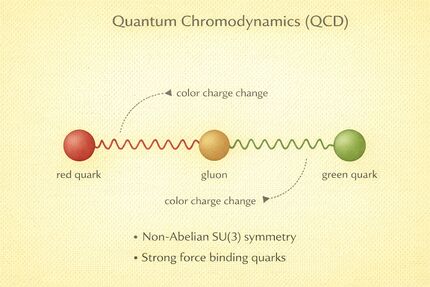
Image from or related to the featured external quantum article.
Featured external quantum article
Multiplexing entanglement in a quantum network
ScienceDaily · Spintronics; Physics; Nanotechnology; Telecommunications; Spintronics Research; Computers and Internet; Communications; Internet
Article preview.
Researchers use rare-earth ions to achieve the first-ever demonstration of
entanglement multiplexing between individual memory qubits in a quantum network.
The article is featured here because it connects current quantum research with a
broader scientific or technological problem.
The preview highlights the main idea while leaving the detailed evidence, figures and
technical discussion to the original source.
Topic area: Spintronics; Physics; Nanotechnology; Telecommunications; Spintronics
Research; Computers and Internet; Communications; Internet.
The selected source is ScienceDaily; the full article link appears below this preview.
The right-side image is selected from the same article URL when a usable article image
is available.
Readers can follow the source link for the complete article, credits and surrounding
context.
External source: ScienceDaily. Selected external quantum article.
Credits: ScienceDaily
Main books
The parent book for quantum foundations, theory, systems, applications, and frontier topics.
Quantum matter organized from materials and molecules down to atoms, particles, and fields.
Mathematical, experimental, computational, statistical, and field-theory methods.
Book IV: particle-physics data analysis, experiments, reconstruction, statistics, software, and machine learning.
Featured stage area
In the particle-physics workshop
A compact look at Book IV: how experiments evolved, how collision data is reconstructed, and where the next detectors may lead.


Quick navigation
Book pages |
Data / See also pages |
Galleries |
Maintenance |
Search the site
Use the site search page to find ScholarlyWiki and Quantum Collection pages.
System note
This is the front page. It is intended for review, testing, and controlled development of the Quantum Collection book system.