ScholarlyWiki a comprehensive guide to modern quantum physics
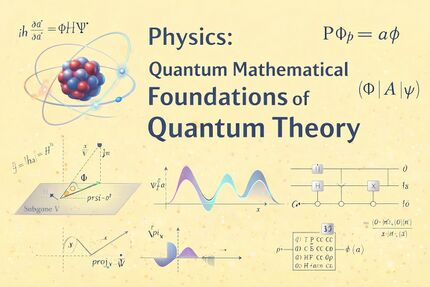
ScholarlyWiki is a structured platform ...
Featured from the quantum literature

Image from or related to the featured external quantum article.
Featured external quantum article
Researchers establish new basis for quantum sensing and communication
MIT News | Massachusetts Institute of Technology · Moe Win, MIT AeroAstro, MIT LIDS, MIT IDSS, Quantum neXus Laboratory, quantum sensing, photon-varied Gaussian states (PVGSs), quantum communications, quantum information, non-Gaussian quantum states
Article preview.
Researchers have established a new basis for quantum sensing and communication. Their
theoretical approach for generating quantum states could be crucial for many areas,
ranging from fingerprinting the magnetic field of the Earth to enhancing astrophysical
research.
The article is featured here because it connects current quantum research with a
broader scientific or technological problem.
The preview highlights the main idea while leaving the detailed evidence, figures and
technical discussion to the original source.
Topic area: Moe Win, MIT AeroAstro, MIT LIDS, MIT IDSS, Quantum neXus Laboratory,
quantum sensing, photon-varied Gaussian states (PVGSs), quantum communications,
quantum information, non-Gaussian quantum states.
The selected source is MIT News | Massachusetts Institute of Technology; the full
article link appears below this preview.
External source: MIT News | Massachusetts Institute of Technology. Selected external quantum article.
Credits: MIT News | Massachusetts Institute of Technology
Main books
The parent book for quantum foundations, theory, systems, applications, and frontier topics.
Quantum matter organized from materials and molecules down to atoms, particles, and fields.
Mathematical, experimental, computational, statistical, and field-theory methods.
Book IV: particle-physics data analysis, experiments, reconstruction, statistics, software, and machine learning.
Featured stage area
In the particle-physics workshop
A compact look at Book IV: how experiments evolved, how collision data is reconstructed, and where the next detectors may lead.


Quick navigation
Book pages
Galleries
Maintenance
Search the site
Use the site search page to find ScholarlyWiki and Quantum Collection pages.
System note
This is the front page. It is intended for review, testing, and controlled development of the Quantum Collection book system.